Sunday, February 10, 2013

A propaganda model by Chomsky and Herman


From all the readings we did for this week I saw that most of them are centered on the concept of democracy, public opinion and participation. In some cases, like in the Reading #18 we read that the author, in this case, editors of the Public Opinion Quarterly, consider that “mass opinion is the final determinant of political, and economic, action”, implying that masses and people determine the decisions of actions in politics and economy. The same authors of this reading saw the press as the “Fourth Estate”. These views of the press as the “fourth estate” imply, according to Mullen and Klaehn, that media acts as guardians or protectors of the public interests and as “watchdogs” regarding the exercise of power. Thus, the media serves as a “system of checks and balances that comprise the modern democratic system” (Mullen & Klaehn 2010).

Later in other readings we see how important is to measure the public opinion because as the authors describe it, it is a very powerful party and according to this in a democratic society the ideas of the majority acts as judges of social and political issues (Peters & Simonson 2004). However, I was disagreeing with some of this authors that, according to my interpretation, give so much power to the mass and the audiences and claimed the audience has most of the power to influence economy and politics.

I found another perspective that was developed by Edward Herman and Noam Chomsky named the “Propaganda Model”. This model was studied by Mullen and Klaehn in a paper. The aim of the propaganda model was to explain the state of the mass media in the U.S and the role of media in society. Contrary, as the audience holding the power or the media defending or guarding the public interests and opinions, Herman and Chomsky proposed that media performance is heavily influenced by political, structural and economic elements.  As Mullen and Klaehn propose, this Propaganda Model challenges or contradicts the assumption that media are liberal and devoted to the interest of the public. In fact, in their study they discuss the contrast between a "liberal-pluralist view" and a more "critical-Marxist view", reflected in the propaganda model. In some of our readings we have seen that authors discuss how polls can reflect the public opinion of the majority and how those are presented as the predominant point of view of a vast amount of people. But the question here is does these results or ideas are really representative? Can they reflect the vision of the majority or they are merely an imposition of the media associated with political, economic or market forces?

The Propaganda Model (PM) proposed by Herman and Chomsky describes the existence of five filters that intervene in the process of news production. Those five filters are:
“1) the ownership, size and profit orientation of mainstream media;
2) advertising as the principle source of revenue for mainstream media and the corresponding influence of advertising values on news production processes;
3)  mainstream media’s routine reliance on agents of power as the primary definers of social reality;
4) organized flak that represents a mechanism of social control;
5) various ideological forces, which may be deployed and adapted to correspond to elite interests when required" (Mullen & Klaehn 2010)

This model had received many critics and in fact the authors predicted that the mainstream media would ignore it. The model was proposed in 1988 and the authors of it think that this model it is getting stronger rather than diminished. Just to mention one example that focus in one of the filters, which is sourcing, they mention how news today, according to an study, are merely the result of public relation releases and how journalists became merely processors of unchecked-facts rather than active seekers of news. They became “churnalists” instead of “journalists” according to Herman and Chomsky.

I consider the ideas of this model are interesting. I wanted to expand on this model a little bit more but I don’t want to make this post too long. For that reason, I attach the article  in case you want to take a look. The purpose of this post was to present another theory that opposes to some of the ideas presented in the readings of this week.  

Sources:
Mullen, A., & Klaehn, J. (2010). The Herman-Chomsky Propaganda Model: A Critical Approach to Analysing Mass Media Behaviour. Sociology Compass 4/4, 215-229.
Peters, J. D., & Simonson, P. (2004). Mass Communication and American Social Thought. Key Texts:1919-1968. Maryland, MD: Rowman & Littlefield Publishers.


Since propaganda and public opinion is something that I’m highly interested in, this week’s readings were ones that I thought were highly valuable when it comes to our discussion of mass communication and social thought.

A connection which I found interesting is the use of propaganda and public opinion in the form of polling and questionnaires. Lind argues that polls show that the population often does not think rationally and that the majority often believes that because they are in the majority that the truth lies in this fact. However, history shows us that propaganda has been used to sway public opinion into believing an outright lie under the pretense that since the mass public was unified in this belief that it must therefore be fact.

Survey Says...

I really should get rid of my landline. The only time I ever answer it is when my mother calls. Most of the time, I don't recognize the number on caller I.D. and I just don't want to listen to a sales pitch or, worse yet, hear the voice of a pollster.

Because who are those guys? I don't trust them. When they say they aren't trying to sell me something, should I believe it? When they frame a question in a particular way, are they just trying to influence my answer?

Which makes me wonder if we can trust the results of public opinion surveys. George Gallup and Saul Rae believed democracy itself rests on the expression of public opinion. In Chapter 21 of our test, Gallup and Rae describe polls as a "swift and efficient method for legislators, educators, experts and editors to get a reliable measure of the pulse of democracy." I'm sure Gallup and Rae would be appalled at the Gallup poll released the day before the last election that predicted a win for Mitt Romney. Oops. Gallup has hired a polling expert from the University of Michigan to review the company's methods. (New York Times, Gallup Conducts Review of Tracking Poll Methodology)

Our readings last week also contained reservations about pubic opinion polls. Robert S. Lynd suggested counting noses doesn't necessarily add up to the truth and that companies like Gallup, "grow rich by perpetuating the public's sense of the competence of its opinions." (Chapter 21)

Certainly, contemporary pollsters are struggling with changes in technology that may influence the sampling of opinion. A study by the nonprofit Pew Research Center suggests the response rate to Pew surveys has dropped from 36% in 1997 to just 9% today. The study found that surveys that included both landlines and cell phones still did reasonably well in provided accurate information. But there were enough differences to raise eyebrows...and questions about survey reliability.

In a Slate article about the the reliability of surveys, author Will Oremus raises concern about various forms of bias and even suggests that public-opinion research was better suited to a time when polls were conducted by going door-to-door. That time is long past.

Oremus quotes census director Robert Groves as saying we're in the middle of a revolution when it comes to measuring public opinion and that tools such as internet data mining are being used to "fill in some of the gaps in traditional sample surveys."

"Will that revolution be the death of pollsters?" asks Oremus. "Survey says: too close to call."

The Pulse of Democracy

After all the negativity that we've discussed lately, it was nice to read Gallup and Rae's "A Powerful, Bold and Unmeasureable Party?" who had an optimistic view on public opinion polls and the importance of bridging the gap between the government and the people. Although today, polls might have a negative connotation, Gallup and Rae had many points of why they were solution to a better political life.


The article quotes Abraham Lincoln saying, "With public opinion on its side, everything succeeds. With public opinion against it, nothing succeeds." I fully agree with this statement and believe for America to succeed in the 1940's when the people's voice was beginning to be heard and if a dictator wanted to be successful, he had to listen. 

Gallup and Rae argue that in years prior the right to vote, to simply choose one party or the other, is not true democracy. "Democracy is more than a legal right which the citizen exercises on a certain day of the year when he enters a tiny polling booth... It is a process of constant thought and action on the part of the citizen. It is self-educational." In order to create the type of democracy Gallup and Rae want to achieve, all free citizens must learn what's happening in their society, voice their opinion/support and in return if they have been heard, make an education decision when voting in the future. 

Not to open a can of worms or bring battle in the next class, but I believe this can be applied to present day elections. How many of the 126 million voters in the last presidential election actually knew what each candidate's platform was and who supported what legislative issues? I agree that it's important for everyone to cast a vote, but I think we can do a better job as Gallup and Rae would have liked us to in taking responsibility to educate ourselves and stay involved the three years in between an election year.

Agreeing that public opinion is no longer a small group of exclusive minority of educated persons but now millions of people spread across 50 states, here's a crazy idea: What would happen if each voter had to answer a few questions right before their vote could be counted?  Simple questions like, "who's the vice president canidate for the party you're voting for?", "What are the president's views on this topic?", "How many electoral votes does a president need to win office?" Would doing this cause the people to learn more about our political system and what's going on or would this cause less people to show up to the polls? 

Finding channels of self-expression for the ordinary people is key in keeping a democracy going. In a later article Needed Research in Communication it also agrees that "Democracy, after all, cannot survive without two-way communication." It's an ongoing challenge that we must remember is a great problem to have in this country. As Gallup and Rae supported, mass communication has enabled this challenge and it's our responsibility today to continue to close the gap between the government and the people because after all, "Public opinion, in this sense, is the pulse of democracy."


Monday, February 4, 2013

The ‘Advertising Culture’

Relatively early on in the “Administrative and Critical Communications Research” article, Lazarsfeld describes the climate and culture of the U.S. as an “advertising culture.” While at first it’s hard to argue against his point, you scan for the date, and alas, this article was written more than 70 years ago! If only he were alive to see the present state of American culture…we’ll just have to assume he’s spinning in his grave.

Today’s advertising and marketing is in fact all around us. From product packaging marketing on fast food cups and bags, our favorite artists and actors drinking a Coke or Pepsi on our “reality” television show, to the clothing worn by today’s youth adorned with visible brand logos and messages, and our news programs covering the best commercials of the Super Bowl…advertising and marketing has become part of everyday American life. 

Art and Mass Culture

In Art and Mass Culture, Horkheimer argues for the independence of the individual and against the acceptance of mass culture. Its a  stance that's understandable at the time it was written.  He was, after all, an exiled, Jewish,intellectual during the time of extreme European nationalism, and seeing this rising wave of blind culture crushing the individual and moving toward a united nefarious goal. But it’s a thought that retains its merit today. He argues that mass culture creates art that leaves only the opportunity for a single reaction to it. Historically art was associated with a time and place, intertwined with the society that had created it and capable of speaking independently to viewer. In his opinion, mass communication destroys this level of intimacy. I think this can be seen today, in that we use mass media as the lense through which to view the world. Mass media is today, much like in Horkeimer’s time an, “unrestricted accommodation of the people to what the amusement industry things they like.” So that we are being told what is good, or right, or beautiful and slowly losing the capacity to discover and interpret creations for ourselves. He quotes Dewey in his description of what is lacking today, “indifference to response of the immediate audience is a necessary trait of all artists that have something new to say.”
His argument is against state fascism but I think it can be applied today to gatekeepers of opinion and the creators media consumables.

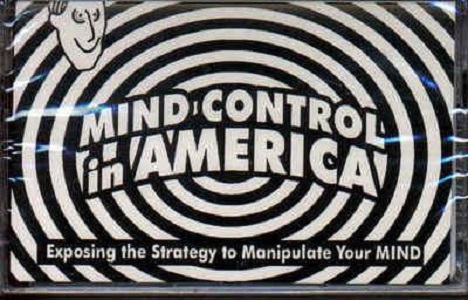
Zombies of media mind control and domination?

"Modern media of communication have become such complex instruments that wherever they are used they do much more to people than those who administer them mean them to do, and they may have a momentum of their own which leaves the administrative agencies much less choice than they believe they have." 


Lazarfleld is a gloom and doom pessimist, it seems to me. He argues that "The techniques of manipulating large masses of people is developed in the business world and from there permeates our whole culture." Are we just zombies, brainwashed to buy and consume with no will or ability to resist? 

Sunday, February 3, 2013

Highlights from Benjamin (or things I at least understood!)

With my grandfather and mother both professional photographers and my two grandmothers both artists, I found Walter Benjamin's "The Work of Art in the Age of Mechanical Reproduction" very intriguing as he dove into the techniques, adaptation and replication process for art. A lot of what he says makes complete sense when you break it down, I've just never taken the time to think about it until now. (Thank you grad class). I know we're going to talk about what mechanical and digital reproduction does to aura but here a few other highlights that stood out to me:
  • The whole concept of "space and time" within art, photography and film. "Since the eye perceives more swiftly than the hand can draw, the process of pictorial reproduction was accelerated so enormously that it could keep pace with speech." (Page 2) Time is key to keep in mind when looking at art, photography, film and it's authenticity. It takes the piece to a whole new level if you can envision what the artist was surrounded by and looking at in the moment of creation, some hundreds of years ago.  The meaning may be difference today than in it's original time. The Mona Lisa today is still breath taking but to image what Leonardo deVinci was feeling at the moment of creation in the early 1500's brings it to a whole new level. In reference to space, close-ups actually expands space and we now have the ability to slow time and extend movement which "reveals entirely new structural formations of the subject" (Page 9). 
  • The difference between an artistic performance on a stage verses in a film. We've discussed numerous authors and their theories of theater and the effects that it has on the audience. Here, Benjamin makes a great case stating that "there is indeed no greater contrast than that of the stage play to a work of art that is completely subject to mechanical reproduction." (Page 6) From the moment a play starts until it finishes, the actors must remain in character which means his/her aura cannot be separated for the spectators from that of that actor. It is stated that film, on the other hand, is denied this opportunity due to the fact it is created by multiple performances and pieced together with machines. There is no audience to perform to or feed off of and the actor must wait months before hearing critiques. Hence, I would say the stage is a purer form of art with a better aura among the actors and audience. 
  • On page 8, I also liked the comparison of the magician and surgeon to the painter and cameraman. Another way to show that the cameraman is not as authentic as the painter in regards to space and reproduction. 
  • I had to laugh on page 7 when Bejmain was the speaking of the dissemination of one writer to many with the invention of the press and stated, "with the increasing extension of the press... an increasing number of readers became writers -- at first, occasional one." as a century later we're now faced with the same challenge with the internet. Amazing how his work can be relevant decades later. 
  • Lastly, for fun I always Google names within the articles we read or works that are referred to. Here, Eugene Atget's photography is credited for becoming some of the earliest standard evidence for historical occurances. Below is his self portrait and a few of his photos:


To me what makes the various forms of art so profound is that one can replication and reproduce it but there is nothing that compares to the original piece of work. I can appreciate replications so that I can afford to purchase them but there is something so special about being in Paris and standing in front of the Mona Lisa or sitting in the audience of a play verse watching it at home on the couch. Technology has made reproduction easier and more cost efficient but that doesn't always mean it's better. I choose the aura of the original. 

Slaves to Fashion

The readings this week were a downer.

Lazarsfeld tells us we are "pawns upon a chessboard, losing the spontaneity and dignity which is the basic characteristic of the human personality." Horkheimer and Adorno believe we are manipulated by the culture industry to the extent that our "inner lives" have disappeared and we don't even realize it. We are enslaved and miserable, unable to resist the forces that grind us down and keep us underfoot.

Surely, this can't be true.

To borrow from the movie Airplane!,  it is true...and don't call me Shirley.

A few years ago, I saw an exhibit at Sheldon that demonstrated the impact of mass culture in our lives. The artist had traveled to large cities around the world, photographed icons of mass culture and then displayed the series of pictures in sections through the exhibit. For example, one area had pictures of people holding Starbucks coffee cups in Rome, Chicago, New York, Mumbai, London, Singapore and other cities. The next section focused on Victoria's Secret shopping bags or Gap t-shirts. It was a vivid example of how homogeneous our world is becoming. 

Another example of mass culture is demonstrated by a scene in the movie, The Devil Wears Prada. Fashion magazine editor, Miranda Priestly delivers a withering attack on assistant Andy Sachs, when Andy scoffs at the choice of which blue belt should be chosen as an accessory. Priestly says Andy is wearing a "lumpy blue sweater" from a Casual Corner store that was chosen for her by the fashion industry.

"...it's sort of comical how you think that you've made a choice that exempts you from the fashion industry when, in fact, you're wearing the sweater that was selected for you by the people in this room from a pile of stuff," says Priestly.

I have to admit, sometimes I wonder if we are hypnotized by a mass culture that is growing so uniform that someday we we won't know if we're in Kuala Lumpur or Fargo. 

And that is depressing.


Upon reading Horkheimer’s excerpt and taking in all the various points and emotions he brings up in a variety of fields, one point that struck out to me was his criticism of Walt Disney and Disney movie productions on page 161 of our textbooks. While he cites Mortimer Adler as someone who “praises Walt Disney as the great master because he reaches a perfection on his field that surpasses our best critical capacity to analyze and at the same time pleases children and simple folk”, he does not agree with Adler’s assessment whatsoever. However, I wonder how Horkheimer would feel about the movie WALL-E.

Saturday, February 2, 2013

"If there is anything the nonconformist hates worse than a conformist, it's another nonconformist who doesn't conform to the prevailing standard of nonconformity." - Bill Vaughan


The tendency of art toward conformity is one of the themes that seems to surface in the critiques of the Frankfurt School philosophers. Benjamin argued that the mechanical reproduction of art resulted in the work losing its aura, the uniqueness and original expression of the art. Horkheimer suggested that mass reproduction of art, of appealing to the masses, meant appealing to the lowest common denominator, which resulted in diminished quality and potential. He argued against formulaic art and for quality over quantity. Adorno suggested this much as well. He felt that mass reproduction of music, for example, resulted in a cheapened standardized version of it and turned it into a commodity. They seemed to suggest that the potential for something unique, authentic, and true is squandered by conforming to expectations about what is aesthetically pleasing or commercially popular.

The philosophers implied that human beings willfully succumb to this conformity, as well as consumerism, to feel happier and to escape the bleak reality of a world that is “nasty, brutish, and short”. According to the members of the Frankfurt School the point of art is not to make us happy, but to force us to confront the reality of our suffering in this world. Art should be avant-garde, experimental, against the status quo, and always testing individuals’ preconceived notions about what art is and should be. 

I suppose few things ignite the fire of debate more than trying to discern whether or not something counts as art. In 1917 Marcel Duchamp took a men’s urinal, plopped it on its side, and presented it as art. What do you think; is it interpretative avant-garde art...or is it just a pisser?


“Searching the lost aura” and the role of printed books in the future


As I was trying to find more perspectives of the role and the interpretation of Aura in Benjamin’s work, I found this interesting paper titled “In search of lost aura” that was presented in the panel: “The work of Art in the Age of Digital Multiplicity” at MIT during 2009 by Piret Viires, a Phd from Estonia. This paper is worth to read it because it integrates very interesting points of Benjamin’s work with today digital reproduction systems and works.

After reading Benjamin’s work I was thinking about the role of aura in this era of digital reproduction and Internet. Certainly, when Benjamin wrote this work there were only mechanical reproduction techniques for the works of art. Viires notes that “...in the digital age, too, the aura of a work of art has been lost, being destroyed by digital multiplicity (Viires, 2009)”. When Viires refers to digital multiplicity he is talking about the multiple ways in which digital literature is available like digital books, blogs and he also mentions “fan fiction” as a way of works of art are losing their “aura”.
Fan fiction is specially subject of discussion for Viires because those and blogs “lack aura in Benjamin’s sense” (Viires, 2009) since they are easily and freely accessible and are “endlessly reproduced works” (Viires, 2009). Fan fiction is described as way in which readers or viewers of a book, film, TV show or comics play a role in adding new lines or chapters to some of these works. Viires notes that what motivates those readers or viewers to do this is the love they feel for this works that take them to imagine new scenes or a different ending to some of these stories. A very interesting point that he provides is when he says that due to thousands of reproductions of a work “there is no longer distance between the reader and the work, no devotion and ardent respect for a work of art” (Viires,2009)
An example of fan fiction is this supposed trailer of Twilight, which reflects a creation of some fans about their expectations for the movie:


What I think is the most important point about Viires analysis of Benjamin’s work is when he discusses that there are some authors that are refusing this idea of the aura of their work disappearing in the digital age. More specifically, he sees printed books as elitist art forms that can be distinguished from Internet literature in mass consumption. This notion will mean a transition between the “postmodernist multiplicity of art forms” and the “modernist elitist meaning of a work of art” (Viires, 2009). Modernism would mean that the author is central and its singularity resides in their unique works of art while postmodernism suppress the boundaries between elitist art and therefore, mass culture blurs the roles of author and the reader and conceives literature as  mixture of different forms (Viires, 2009).
Finally, he discusses that the printed book “acquires an elitist significance” (Viires,2009). What I understand he is trying to say is that a printed book will become the expression of a new elite and that maybe the aura lost in the digital world can be found again with printed books. All the ideas that he exposed just makes me think that whether this means than in some years since most of the books will be digitalized and spread over these new devices such as smarthpones and iPads, the printed books would be valued as “true works of art” and thus, the people who owns it would be regarded as a new elite of readers. When I think about it, I see it might happen this but, on the other hand, I think how this might happen since most of the authors might be interested in being profitable rather than having their works regarded as works of art. It might be the case that they sell their unique works in printed version for very high prices so they can keep distribution limited to the new elite. Do you think this idea of having only printed books and the notion of elitist works of art would contribute to preserve the aura that some of the authors want to create? Do you think that when we talk about books is difficult to find the notion of aura?

Sources:

 
Viires, P. (2009, April). In search of the Lost Aura. Panel: The Work of Art in the Age of Digital Multiplicity. Retrieved February 3, 2013, from http://web.mit.edu/comm-forum/mit6/papers/Viires.pdf

A discussion between Plato and Benjamin


Plato and Walter Benjamin would have many questions and issues to discuss in a conversation with each other as I think about the “Phaedrus” and “The Work of Art in the Age of Mechanical Reproduction.” For Plato, the repetition of a story passed along for generations was the ultimate form of “art.” Would Benjamin argue that every time the story was told by someone different, the story lost its “aura”? I think Plato would say that each storyteller or philosopher brought something unique to the story when he was telling it and that each telling of the story kept the aura alive.

While Plato was not a proponent of writing, as his three major criticisms were discussed in class, Socrates did say that “the disgrace begins when a man writes not well, but badly.” Would Plato argue with Benjamin that as long as reproductions of artwork or film or photography are done well, then the art (or images) do not lose their “aura”? In other words, poor copies of the art or simply terrible films or photographs would not usually be approved by the original artist, so they would not have an aura. Or, perhaps Plato and Benjamin would have a discussion about when the copies had been made by the artist himself does that affect whether the aura still exists? I would argue that the determination of the existence of the aura should be made by the artist or photographer as really only they know the ritual they were using when they created the art. 

One could also argue with Benjamin that when you are looking through a camera lens, you are capturing moments or even capturing people’s “aura” through the photographs. While there are simply too many photographs taken by a digital camera and too many shots filmed for one scene in a movie, as Benjamin mentioned, that would allow him to believe that each image has its own aura or that digital media can restore the aura, I think that he should consider the fact that it is possible to take photographs that capture moments not normally seen, such as the movement of a hummingbird’s wings. Plato also might argue with Benjamin that films allow for conversations to be preserved, and conversations deserve the utmost respect. As Socrates said, “I believe that the grasshoppers chirruping after their manner in the heat of the sun over our heads are talking to one another and looking down at us. What would they say if they saw that we, like the many, are not conversing, but slumbering at mid-day, lulled by their voices, too indolent to think? Would they not have a right to laugh at us? They might imagine that we were slaves, who, coming to rest at a place of resort of theirs, like sheep lie asleep at noon around the well. But if they see us discoursing, and like Odysseus sailing past them, deaf to their siren voices, they may perhaps, out of respect, give us of the gifts which they receive from the gods that they may impart them to men.”